

Most Cases are Reduced or Dismissed: We are proud of our record with our clients. You deserve an attorney who can help prevent you from acquiring a criminal record.

How to Beat an OWI in Wisconsin – Get Your OWI Dismissed or Reduced
Preparation is the lynchpin in beating OWI charges. At Tracey Wood & Associates, preparation is more than just a step in the process. It is the foundation of success and the reason our team consistently achieves favorable outcomes for clients charged with OWI. Preparation is the key to winning or achieving the best possible result because it translates directly into superior knowledge, strategic advantage, and client empowerment throughout the legal process.
The side that knows more about the case is more likely to win. From the moment a client retains Tracey Wood & Associates, our defense team begins a full, independent investigation. We never take the police report at face value. Every detail is tested and verified. Preparation allows us to uncover errors and weaknesses in the State’s case, whether it involves an illegal stop, improper testing procedures, or mishandled evidence. We gather and review every piece of evidence — including police reports, bodycam and dashcam footage, dispatch records, chemical and blood test data, and witness statements — to ensure nothing is overlooked. This depth of preparation gives our attorneys complete command of the facts and a clear strategic edge over the prosecution. By the time our defense team walks into court, we will know more about the case than the arresting officer and the prosecutor.
Preparation also builds the foundation for a winning strategy and narrative. Once we control the facts, we can frame the story in a way that aligns with truth and credibility. Every case is prepared as if it will go to trial, even if it ultimately resolves beforehand. This proactive approach allows us to anticipate every move the prosecution might make and respond with confidence. It also strengthens our position in negotiations, as prosecutors who recognize how deeply we understand the case are often more willing to reduce or dismiss charges.
Finally, preparation empowers our clients. When clients understand their case, the risks, and the defense strategy, they gain control over their future. We believe that education is power, so we walk our clients through each step, making sure they know what to expect and how their decisions affect the outcome. Instead of leaving their fate solely in the hands of a judge or jury, our clients enter court fully informed and confident.
At Tracey Wood & Associates, preparation is not optional. It is the core of our defense philosophy and the reason we consistently outwork, out-investigate, and out-prepare the opposition. This level of commitment ensures that every client receives the strongest possible defense and the best chance at a successful outcome.
 What Must Be Proven for an OWI Charge in Wisconsin
Many clients ask, “How can I beat my OWI?”
To convict you of an OWI, the State must prove two key elements beyond a reasonable doubt.
- 1. Operation or Control
The prosecution must show that you were actually driving or had the ability to drive. That does not always mean the car was moving. Even sitting behind the wheel with the engine running or having the keys within reach can be argued as being “in control.” - 2. Impairment or Prohibited Blood Alcohol Concentration (BAC)
The State must also prove that you were impaired or had an unlawful BAC or drug level at the time. In Wisconsin, that typically means showing that your BAC was 0.08% or higher, that you were too impaired to drive safely, or that you had a restricted substance in your system.
While these elements may sound straightforward, every case has cracks, and those cracks can be found and used to achieve justice. Whether it involves questioning whether you were truly “in control” of the vehicle, exposing procedural errors, or challenging the accuracy and legality of chemical tests, these weaknesses can turn the case in your favor. When properly identified and used, they can lead to a dismissal, reduction, or even a not guilty verdict.
Tracey Wood & Associates: The Wisconsin OWI Defense Authority
With thousands of OWI cases won, Tracey Wood & Associates has built a reputation for uncovering hidden flaws in the State’s evidence and using them to protect clients’ rights. Your case is not just another file. It is an opportunity to restore fairness, balance, and justice. Below are 30 example OWI defenses that can be used to beat an OWI charge.
30 Potential Ways to Beat an OWI in Wisconsin
Every OWI case is different. Sometimes the key is how the officer conducted the stop. Other times it is a mistake in testing, or even a medical condition that created the appearance of impairment.
Below are 30 of the most common ways attorneys successfully challenge OWI charges in Wisconsin, each explained in clear, easy-to-understand language. This page will continue to grow over time, showing potential clients that there are truly hundreds of ways to fight and beat an OWI charge.
1. Lack of Reasonable Suspicion for the Stop
Explanation:
Before an officer can stop a driver, there has to be something that clearly draws their attention. Maybe the car drifts over the center line, a taillight is out, or the driver rolls through a stop sign. These are visible reasons that suggest something might be wrong. What they cannot do is pull someone over simply because it is late at night or because a driver looks suspicious. The law requires a factual basis for the stop, something an ordinary person could see or describe, not just a gut feeling. If that clear reason is missing, the entire stop may be challenged later, which can weaken or even overturn the case.
Example:
Jake drives home after dinner, following every rule. An officer stops him just because it’s bar closing time. The judge rules the stop illegal and dismisses the case.
2. Lack of Probable Cause for Arrest
Explanation:
Even if a traffic stop is legal, an officer cannot make an arrest without enough proof that a crime has actually been committed. This means they must observe clear signs of impairment, such as slurred speech, the smell of alcohol, or poor performance on field sobriety tests. A simple hunch or assumption is not enough. The evidence must show that it was reasonable to believe the driver was operating while impaired. If that proof is not there, the OWI charge can be challenged.
Example:
Samantha tells the officer she had one beer but performs every test well. The officer arrests her anyway. The court decides there wasn’t enough cause and throws out the case.
3. Officer’s Failure to Follow Procedure
Explanation:
When police conduct an OWI investigation, every step matters. Officers are trained to follow specific procedures, properly collecting and storing evidence, and documenting each action accurately. These procedures exist to protect both the investigation and the individual’s rights. If any part of that process is skipped or handled incorrectly, it can cast doubt on the reliability of the evidence.
Example:
For example, an officer might place a driver in handcuffs and make an arrest, then later ask them to perform field sobriety tests.
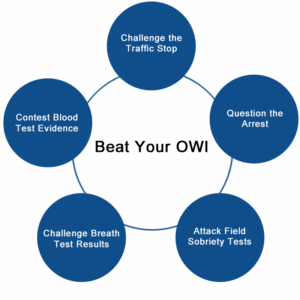
4. Mistakes in Field Sobriety Testing
Explanation:
Field sobriety tests are designed to check coordination and focus, but outside factors can make them unreliable. Uneven pavement, bright flashing lights, cold weather, or nearby traffic can cause even a sober person to appear unsteady or distracted.
Example:
Mark tries to complete his balance test on a sloped gravel shoulder near moving cars. He wobbles slightly, but dashcam footage later shows the poor conditions, and the results are dismissed.
 5. Physical Limitations Affecting Field Tests
Explanation:
Not everyone can perform field tests the same way. Age, past injuries, or medical conditions can make it difficult to balance, walk straight, or follow instructions. These factors can lead to unfair results that do not accurately reflect sobriety.
Example:
Rachel has a knee injury that affects her balance. When asked to stand on one leg, she struggles to stay steady. Her doctor later confirms the issue is medical, not alcohol-related, and the case is dismissed.
6. Improper Administration of the Breath Test
Explanation:
Breath tests must be performed by properly trained officers using well-maintained equipment. If the machine is not calibrated or the officer does not follow the correct steps, the results may be unreliable.
Example:
Officer Ramirez uses a backup breath machine that has not been checked or serviced in months. When maintenance records are requested for Emma’s test, none can be found. The court decides the results cannot be trusted.
7. Failure to Observe the Required Waiting Period
Explanation:
Before a breath test, the officer must observe the driver for about 15 to 20 minutes to make sure nothing interferes with the results. This includes ensuring the driver does not eat, burp, vomit, or place anything in their mouth that could affect the reading.
Example:
Officer Jenkins leaves the room to take a phone call. During that time, Sarah burps. Because the officer was not present for the entire observation period, the breath test results are later found to be unreliable.
8. Contaminated or Improper Breath Sample
Explanation:
Certain conditions or substances can distort a breath test result. Acid reflux, GERD, asthma inhalers, or even mouthwash can leave traces of alcohol in the mouth, leading to a reading that does not reflect actual blood alcohol concentration.
Example:
Lisa experiences acid reflux and burps just before taking the breath test. Her result shows a BAC of 0.12 percent, but a medical review confirms stomach acid affected the reading. The evidence is later excluded.
9. Inaccurate or Contaminated Blood Test
Explanation:
Blood samples must be collected, labeled, and stored under proper conditions to ensure accuracy. If the sample is mishandled, exposed to heat, or not properly sealed, fermentation or contamination can occur and change the results.
Example:
An officer stores a blood sample in his patrol car overnight. When the lab analyzes it, the alcohol level appears higher than expected. The court finds the result unreliable and removes it from evidence.
10. Improper Blood Draw Technique
Explanation:
Blood draws must be performed by qualified personnel using sterile procedures and properly maintained equipment. If alcohol-based wipes or expired collection kits are used, the sample can become contaminated and produce inaccurate results.
Example:
At the hospital, a blood draw is performed in a busy emergency room by a technician who uses an alcohol wipe and an old collection kit. The sample is not sealed correctly and sits on the counter for hours before being logged. When the results come back unusually high, the defense challenges the chain of custody and contamination risks. The court rules the test unreliable and excludes it from evidence.
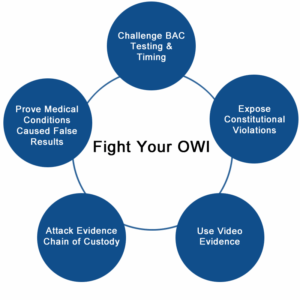
11. Faulty Breathalyzer Calibration or Maintenance
Explanation:
Breath-testing devices must be properly maintained and calibrated on a consistent schedule. If the machine has not been serviced, shows error messages, or has a history of inaccurate readings, the results may not be trustworthy.
Example:
When Daniel’s breath test shows a result just over the legal limit, his attorney requests the maintenance logs for the machine. The records reveal it had failed multiple accuracy checks and had not been recalibrated in weeks. The court rules that the device could not be relied upon, and the test results are thrown out.
12. Rising Blood Alcohol Defense
Explanation:
A person’s blood alcohol concentration (BAC) depends on how much they drank, when they finished drinking, and how quickly their body absorbs alcohol. Because alcohol takes time to enter the bloodstream, a driver’s BAC may continue to rise after they stop drinking. It is possible to be under the legal limit while driving but test over the limit later.
Example:
Jake finishes two drinks just before leaving a restaurant. When he is tested about an hour later, the result shows a BAC of 0.10. A toxicologist testifies that Jake’s alcohol level was still rising at the time of the stop and was likely below 0.08 when he was driving.
13. Delay Between Arrest and Testing
Explanation:
When there is a long gap between the time a person was driving and when their breath or blood test is taken, the results may not accurately represent their BAC while behind the wheel. Alcohol levels can rise or fall depending on when the last drink was consumed.
Example:
After a minor crash, Emily waits more than two hours before her blood test is taken at the hospital. Her attorney argues that her BAC could have changed during that time. The court agrees that the result does not reliably show her level at the time of driving and excludes the evidence.
14. Improper Miranda Warnings
Explanation:
When someone is placed under arrest, officers must clearly inform them of their right to remain silent and their right to an attorney before asking any questions. If this reminder is not given, any statements made afterward may be ruled inadmissible in court.
Example:
Ryan is questioned in the patrol car after being handcuffed, before being read his rights. The officer begins asking pointed questions aimed at getting incriminating statements, and Ryan unknowingly answers in fear. Because the questioning took place before a proper Miranda warning, the court excludes his statements from evidence.
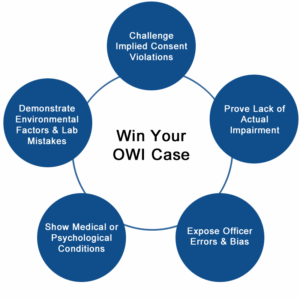 15. Health Conditions Affecting Test Results
Explanation:
Certain medical conditions can create symptoms or chemical reactions that mimic alcohol impairment. Diabetes, GERD, acid reflux, and ketosis can all produce compounds in the body that lead to false positive results on breath tests.
Example:
Brian, who has diabetes, produces acetone on his breath due to his condition. The breath-testing device mistakes it for alcohol, showing a BAC of 0.09. His medical records later confirm he had not been drinking, and the court rules the results invalid.
16. Video Evidence Contradicting Officer Claims
Explanation:
Dashcam and bodycam footage often provide an objective record of what occurred during a traffic stop or arrest. This video evidence can be critical when an officer’s written report or testimony differs from what actually happened. Clear footage showing calm behavior, steady movements, or respectful cooperation can cast serious doubt on claims of impairment and help establish credibility for the defense.
Example:
Officer Davis reports that Sarah stumbled when exiting her car, slurred her words, and appeared confused. However, dashcam footage shows her stepping out steadily, answering questions clearly, and following instructions without hesitation. When the video is reviewed in court, it becomes clear the officer’s account was inaccurate. The inconsistencies lead prosecutors to dismiss the case before trial.
17. Improper Handling of Evidence
Explanation:
Evidence in an OWI case must be carefully documented and preserved from the moment it is collected. Each person who handles a blood, urine, or breath sample is expected to record the transfer to maintain a clear chain of custody. If a step is missed or the record is incomplete, questions can arise about how the evidence was stored or whether it remained uncontaminated. Even minor issues, such as unclear labeling, temperature changes, or unsigned forms, can affect the reliability of the results.
Example:
John’s blood sample is drawn at the hospital and later sent to the state crime lab. The paperwork shows several transfers, but one section of the chain-of-custody form is left unsigned. When this gap is brought to light, the court finds that the handling process cannot be verified and excludes the blood test from evidence.
18. Lack of Proof of Actual Operation or Control
Explanation:
The state must show that the person was actually operating or in control of the vehicle. Being near or inside a car is not the same as driving it. Without evidence that the person started, moved, or intended to move the vehicle, prosecutors may struggle to prove control beyond a reasonable doubt.
Example:
Jeff is found asleep in the driver’s seat of a parked car. The engine is off, and the keys are nowhere to be found. Since no one saw him drive and there is no indication the vehicle was recently operated, the court determines there is not enough evidence of control, and the case is dismissed.
19. Illegal Search and Seizure
Explanation:
Police must have a warrant, valid consent, or clear probable cause to search a vehicle. If a search is conducted without legal justification, any evidence collected during that search may be excluded from court. This protection ensures that constitutional rights against unreasonable searches are upheld.
Example:
Glenda is stopped for speeding, and during the traffic stop, the officer opens her glove box without permission or a warrant. When the defense challenges the search, the court finds it unjustified and rules that the evidence cannot be used.
20. Warrantless Blood Draws
Explanation:
Police generally need a warrant to take a person’s blood. In some cases, they argue that “exigent circumstances” made a warrant unnecessary, claiming time was critical because alcohol levels can change quickly. However, Wisconsin courts have ruled that this reasoning does not always apply. If officers could have obtained a warrant by phone or used a less invasive test instead, the blood draw may be ruled unlawful.
Example:
Brian’s blood is drawn at the hospital without a warrant. The officer explains that there wasn’t enough time to contact a judge, but court records show a judge was available by phone. Because a warrant could have been obtained, the judge rules the blood draw illegal and excludes the test results.
21. Constitutional Violations
Explanation:
If police detain you too long, pressure you into testing, or violate your rights, the evidence they collect can be excluded. Courts look closely at whether the officer’s conduct was reasonable and whether your constitutional protections were respected during the investigation.
Example:
Alex is kept waiting for nearly an hour before being arrested. The judge decides the delay was unreasonable and suppresses the evidence gathered during that time.
22. Lack of Evidence of Impairment
Explanation:
Even if your blood alcohol concentration (BAC) is over 0.08, the prosecution must still prove that you were actually impaired and unsafe to drive. Everyone’s tolerance is different, and test results alone don’t always show how alcohol affected your ability to operate a vehicle safely.
Example:
Jane’s BAC is 0.09, but video footage shows her driving smoothly and speaking clearly. The jury determines that she was not impaired and finds her not guilty.
23. Improperly Explained Implied Consent Warnings
Explanation:
Police are required by Wisconsin law to read the “Informing the Accused” form exactly as written. This form explains your rights and the consequences of refusing a chemical test. If the officer skips parts, paraphrases the language, or adds confusing statements, it can mislead the driver about their options. Any deviation from the required wording can make the test result unreliable or inadmissible in court.
Example:
After his arrest, Ryan asks what happens if he refuses the breath test. Instead of reading the full “Informing the Accused” statement, the officer summarizes it in his own words and fails to mention that Ryan has the right to request an additional test. At the hearing, the defense attorney argues that the officer’s incomplete and misleading explanation violated Wisconsin’s implied consent law. The judge agrees, and the BAC result is excluded.
24. Right to Your Own Independent Test
Explanation:
If police take your blood or breath test, you have the right to request your own additional or alternate chemical test. You can ask for a blood test after a breath test, or have another lab analyze a new sample. If police deny your request, it violates Wisconsin’s implied consent laws, and the state’s test results may be excluded from evidence.
Example:
Ashley asks for an independent test after giving a police-ordered blood sample. The officer refuses. The court rules that her right was violated and excludes the BAC evidence.
 25. Officer Bias or Misjudgment
Explanation:
Officers sometimes mistake tiredness, nervousness, or medication side effects for intoxication.
Example:
Megan works overnight shifts and has red eyes from fatigue. The officer assumes she’s drunk, but her BAC is below 0.08. The case is dismissed.
26. Inaccurate Police Reports
Explanation:
If an officer’s written report doesn’t align with bodycam footage or other evidence, it can call their observations into question. Even small inconsistencies or exaggerations may lead the court to doubt the reliability of the state’s case.
Example:
The report claims Paul “failed every test,” but video footage shows he completed most steps correctly. The judge questions the accuracy of the report and decides to dismiss the case.
27. Faulty Lab Work or Human Error
Explanation:
Even skilled lab technicians can make mistakes. Samples can be mislabeled, testing materials may be expired, or results might be mixed up during analysis. When this happens, the accuracy of the test becomes unreliable.
Example:
At the state lab, two blood samples labeled “Brian T.” and “Bryan T.” are accidentally swapped. When the error is uncovered, the court excludes both results from evidence
28. Environmental or Road Conditions
Explanation:
Bad weather, poor lighting, or rough roads can cause a sober driver to look unsteady or make small mistakes that seem like impairment. Officers sometimes mistake these natural driving challenges for signs of intoxication.
Example:
During a heavy snowstorm, Jake swerves slightly to avoid a patch of ice on a rural highway. The officer assumes he’s impaired, but dashcam footage later shows that the slippery road conditions caused the movement.
29. Common Neurological Defenses
Explanation:
Certain medical conditions can affect movement, balance, or speech in ways that resemble impairment. Disorders like Parkinson’s disease, multiple sclerosis, cerebral palsy, or seizure disorders can cause unsteady walking or slurred speech, which officers sometimes misinterpret as signs of intoxication.
Example:
Lisa has multiple sclerosis and struggles to walk heel-to-toe during a field sobriety test because of muscle stiffness. The officer believes she is intoxicated, but her medical records later confirm that her condition naturally affects balance and coordination.
30. Common Psychological Defenses
Explanation:
Mental and emotional conditions can sometimes cause reactions that resemble impairment. Anxiety, panic attacks, fatigue, or post-traumatic stress disorder (PTSD) can lead to trembling, confusion, or delayed speech even when no alcohol or drugs are involved.
Example:
During a late-night traffic stop, Mark, a veteran with PTSD, becomes visibly shaken by the flashing lights and sudden commands. His hands tremble and his speech slows. The officer believes he is impaired, but a psychological evaluation later confirms that his reaction was trauma-related rather than caused by intoxication.
 Alternatives to an OWI Conviction in Wisconsin
While challenging an OWI charge in court is often the primary defense strategy, there are also alternatives that may help you achieve a favorable outcome without going to trial. In some cases, pursuing an alternative resolution can be a smart and strategic approach that reduces penalties or avoids a conviction altogether. However, these options depend on the specific facts of your case, your background, and the policies of the county where you were charged. Not all counties in Wisconsin offer these programs, and eligibility depends on your record, the circumstances of your arrest, and local prosecutorial policies.
These programs often emphasize rehabilitation and resolution rather than punishment. In the right circumstances, they can help minimize the long-term impact of an OWI, provided that all requirements are successfully completed.
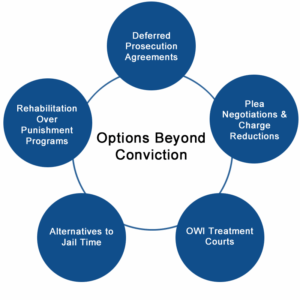
Deferred Prosecution Agreements (DPA)
In some counties, prosecutors offer Deferred Prosecution Agreements that allow individuals to avoid a conviction entirely. To qualify, you must agree to complete certain requirements such as alcohol education or treatment, community service, and a period of sobriety. Once all conditions are met, the OWI charge may be dismissed or reduced to a lesser offense.
Plea Negotiations and Charge Reductions
In some cases, your attorney may be able to negotiate a reduction of your OWI charge to a lesser offense, such as reckless or inattentive driving. These agreements can help you avoid a criminal record, reduce fines, and lessen the impact on your license and insurance.
OWI Treatment Courts
For individuals struggling with alcohol or substance dependency, some Wisconsin counties offer OWI Treatment Courts. These specialized programs emphasize treatment and accountability over punishment. Participants attend counseling, undergo regular testing, and appear frequently before a judge. Successful completion often results in reduced penalties or the possibility of avoiding jail time.
Alternatives to Jail
Even when a jail sentence is ordered, there may still be options available. Some counties offer electronic monitoring or house arrest, which allow you to maintain employment and family responsibilities while serving your sentence under supervision. These alternatives help you remain productive and stable while meeting court requirements.
Schedule a Free Legal Consultation
Just because you were accused of an OWI does not mean you will be convicted. Do not settle for less with an inexperienced attorney or a public defender. Invest in a proven defense attorney who knows how to beat OWI charges so you can move forward and reclaim your life and dignity. Investing in your future starts today. One day, you’ll look back, give yourself a pat on the back, and say, “Thank goodness I made the right choice.”
Submit your contact information below to schedule your free OWI case evaluation. Consultations typically last between 30 and 60 minutes and can be held in person, over the phone, or online. During your consultation, you’ll have the chance to ask questions, review the details of your case, and start developing a defense strategy tailored to your situation. There is nothing to lose and everything to gain.
Featured in The Media




Call 1-888-597-3622 or Schedule a Free Case Evaluation Online
Contact Us
Footer
Locations
Headquarters, Main Office, and Mailing Address
Tracey Wood & Associates
6605 University Avenue
Suite 101
Middleton, WI 53562
Downtown Office

Tracey Wood & Associates
345 West Washington Avenue
Suite 328
Madison, WI 53703
Tracey Wood & Associates
6605 University Avenue
Suite 101
Middleton, WI 53562
Downtown Office
Tracey Wood & Associates
345 West Washington Avenue
Suite 328
Madison, WI 53703